


Does a Tooth Abscess Require an Apicoectomy?
I’ve had a chronic abscess above my top right second molar. My dentist has watched the abscess to ensure it doesn’t grow or cause discomfort. Two weeks ago, my dentist surprised me and recommended that I see an endodontist for a root canal. The endodontist recommended an apicoectomy to ensure I do not have an abscess. I read about the procedure, and I think it’s too aggressive. Is there an alternative to the apicoectomy? What if it’s not a cyst? Thanks. Hannah from NM
Hannah,
Although dental schools teach dentists about cysts and the complications they can cause, most dentists rarely see true cysts in everyday practice. Some dentists also tend to magnify the risks so patients understand the risks and the dentist is protected if complications arise.
Is This Swelling Likely a Cyst?
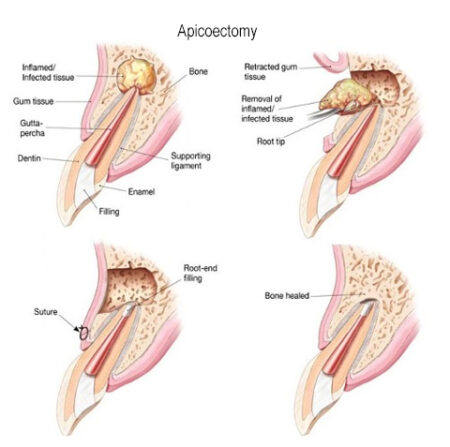
Swelling could involve a cyst, but the odds are relatively low. In most cases, swelling comes from a chronic dental infection. Root canal therapy is usually the more conservative and appropriate first step. An apicoectomy seems unnecessary at this stage.
Why Treat the Infection?
An ongoing abscess allows bacteria to enter your bloodstream repeatedly. Even when an infection does not cause severe pain, it can still affect your overall health and energy level.
After the root canal treatment, you may begin to feel better overall. Chronic dental infections often cause fatigue.
Is Root Canal Treatment Worth It?
In general, root canal treatment has a success rate of at least 85 percent. When an experienced dentist or endodontist uses modern technology and techniques, the success rate is often considerably higher.
Even if the root canal does not heal completely, you still have additional options later. At that point, your dentist or endodontist could consider the apicoectomy they mentioned. Starting with the more conservative treatment first usually makes sense.
Dr. Thaddeus Michalski, a Rocky Hill, Connecticut dentist, sponsors this post. Read why many of his patients say he is one of the best dentists in town.
How Long Should It Take to Identify the Cause of a Toothache?
I’ve seen my dentist twice for a toothache I’ve had since last August. My last dental exam and clean appointment was in May, and my dentist said the tooth looks fine in the x-ray. My dentist prescribed antibiotics last week, but I am concerned about losing the tooth since they don’t have any other recommendations. What is the average time for finding what’s causing a toothache? Thanks, Johan, from Seattle
Johan,
 Your toothache began after X-rays in May, so a new image is necessary. The earlier films may have been bitewings, which are useful for checking cavities but don’t show the tips of the roots. A periapical X-ray can reveal whether the tooth pulp is infected, which could be causing your pain.
How Can a Dentist Identify What’s Causing a Toothache?
A toothache can have several causes besides a cracked filling. Dentists have additional diagnostic tools to better understand your symptoms. A careful evaluation may include:
- Gently tapping the tooth to see if it triggers discomfort
- Applying cold to observe whether it worsens or eases the pain
- Using heat for comparison
- Running an electrical test to check whether the nerve is still alive
These tests help determine what’s happening inside the tooth and how to treat it to relieve your toothache.
Why Is Antibiotics-Only Treatment Risky?
While antibiotics can reduce symptoms, they don’t remove infections inside the tooth. The bacteria can linger and return once you finish the the medication. Effective toothache remedy involves treating the tooth with root canal treatment to remove the infection and protecting the tooth with a crown.
If you’ve tried antibiotics without improvement, consider consulting another dentist for a second opinion and a lasting solution.
Dr. Thaddeus Michalski, a Rocky Hill, Connecticut dentist, sponsors this post. Read about his efforts to provide some of the best dental care in Rocky Hill.
Should I Still Have Pain After a Tooth Extraction?
In March, my dentist extracted a broken upper right root canal tooth. She cut the tooth in sections for easier removal. I still have pain in the side of my face every evening. I have some numbness on the right side of my face and occasional earaches. My dentist prescribed a pain reliever, but it didn’t help. Is there something my dentist is missing?
Tami,
Pain after an extraction should not linger longer than a week. If you have felt pain since March, something is wrong.
What Causes Lingering Pain After Tooth Extraction?
A dry socket or an infection is the most frequent cause of lingering pain after a tooth extraction. A dentist would need to examine the extraction site and take an X-ray to identify the cause of your discomfort.
- Dry socket – When the blood clot at the extraction site dislodges, it exposes nerves and causes intense pain.
- Infection – Bacteria can enter the extraction site and cause inflammation and pain.
Antibiotics for Lingering Pain
Antibiotics can help treat an infection. Pain from an extraction can transfer into your jaw or other teeth. However, your mouth should not feel numb.
What to expect—A strong antibiotic like clindamycin can treat the infection. Use the medication as directed to prevent a recurring infection.
Get a Second Opinion If Necessary
If you want a second opinion, please see a dentist promptly. Otherwise, the infection will continue to spread to other teeth, the supporting bone, and possibly into your bloodstream.
Rocky Hill, Connecticut, cosmetic dentist Dr. Thaddeus Michalski sponsors this post. Read how he strives to provide patients with some of the best dental care in Rocky Hill.
My Dentist’s Misdiagnosis Led to Unnecessary Tooth Extraction
 I was sensitive to cold foods and drinks in my lower right first molar, and my toothache felt worse if I touched the tooth. Since I didn’t have a regular dentist, I used an advertising dentist I had seen on TV and billboards.
The dentist said I had three impacted wisdom teeth, and one may be pushing on a nerve. He also recommended a filling in my tooth. After the filling, my tooth pain increased, so the dentist adjusted my bite and prescribed antibiotics. He told me to take over-the-counter pain medications. The tooth didn’t improve, so the dentist referred me to an oral surgeon for wisdom tooth removal. The first molar tooth still hurts, and I explained that the pain is not near my wisdom teeth.
Two days later, I went to the ER, and they took an X-ray, explaining that I had an abscess. My dentist referred me to an endodontist who was booked for three weeks. The oral surgeon agreed that I had an abscess but recommended an extraction since I couldn’t get a root canal. Now, I have lost a tooth and am out of hundreds of dollars for this nonsense. How can I get my money back? – Thank you. Ryan
Ryan,
Your dentist made severe mistakes in diagnosing and treating your oral pain. We recommend demanding that the dentist pay for your oral surgeon and ER visits and the cost of a dental implant to replace your missing first molar. Explain that you are willing to file a malpractice claim for damages.
Dental Diagnostic and Treatment Mistakes
The mistakes your dentist made with your first molar toothache include the following:
- Failure to recommend root canal treatment – Your toothache, increased pain when touched, and temperature sensitivity indicated that you needed root canal treatment. Bacteria caused tooth inflammation and probably spread to the root tip, which would cause sensitivity.
- Unnecessary dental filling and antibiotics —Your dentist placed a filling for deep decay and adjusted your bite. Also, the antibiotic prescriptions suggest that he may have thought you had a tooth infection yet did not recommend root canal treatment or refer you to an endodontist. Still, antibiotics alone do not remedy a tooth infection—root canal treatment does.
- Facial swelling—After seeing your swelling, it should have been clear that you had an infection. However, you had to go to the ER for help. Your dentist still didn’t drill an opening in your tooth to relieve your pain, which would have helped.
- Referral to an endodontist who couldn’t help promptly – Finally, after getting a referral, the endodontist couldn’t see you for two weeks. Your dentist should have done everything possible to find a specialist for prompt treatment.
What Can You Do If Your Dentist’s Treatment Was Unnecessary?
If your dentist’s treatment was unnecessary, you may allow them to pay for it before filing a legal claim. Your dentist should be willing to pay to replace your mistakenly extracted tooth with a dental implant. If your dentist is uncooperative, you may seek an attorney. Replacing the tooth is vital to prevent other teeth from drifting. Otherwise, the issue may disrupt your bite and lead to TMJ disorder.
Dr. Thaddeus Michalski, a Rocky Hill, Connecticut dentist and Diplomate of the International Congress of Oral Implantologists, sponsors this post.